Start here
What to know
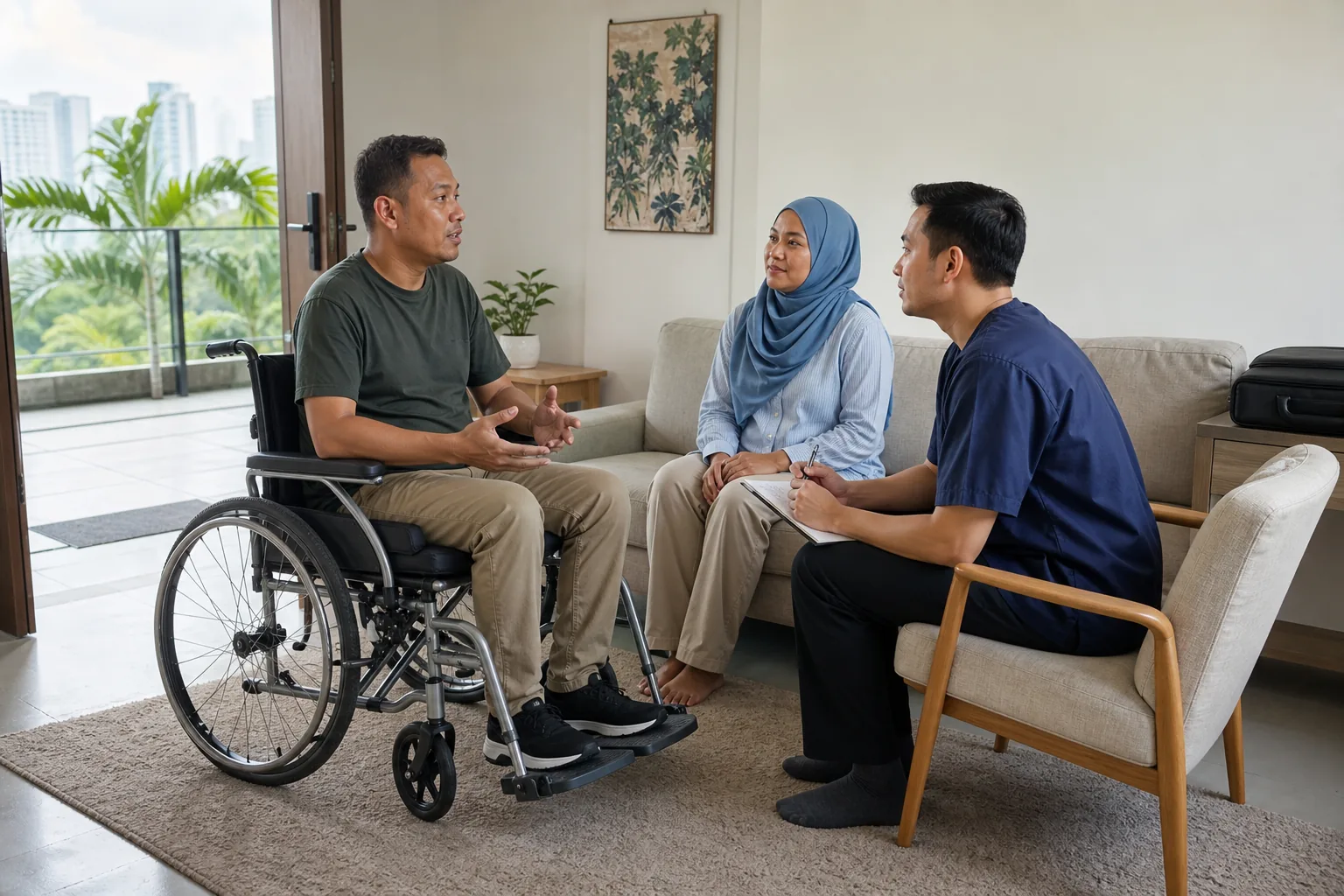
The practical focus is whether the person stays in the wheelchair or transfers, how far they can tilt or open comfortably, and the space needed to work safely. Share the type of chair, transfer and support needs and any fatigue, so the visit is comfortable and the plan realistic.
For this situation
What matters in this situation
Main concern to resolve
Make the visit workable despite travel, transfer, stairs, lifts or room constraints.
Information that changes the plan
Confirm the visit goal, travel barrier, equipment or positioning needs, likely scope, fee items and the fallback if home care is not enough.
Question to ask
What should the first visit achieve, and which findings related to a wheelchair user’s access and mouth-care needs would change the plan?
Decision checklist
Questions to answer now
- What should the first home visit achieve?
- What is worth confirming about a wheelchair user’s access and mouth-care needs before booking?
- What written result, referral or follow-up should you expect?
Choose the right care setting
Where Dental Assessment for a Wheelchair User is best delivered
The right setting depends on the work required, available equipment, medical risk, positioning and follow-up.
At home
Most useful when travel is the main barrier and the immediate goal is assessment, prevention, comfort or planning.
Dental clinic
More suitable when care needs imaging, fixed equipment, precise chair positioning or a longer procedure.
Specialist or hospital
Needed for complex medical risk, sedation, surgery, major trauma or a life-threatening emergency.
Before contacting
What to prepare
- Write the exact question or visit goal for a wheelchair user.
- Gather facts relevant to a wheelchair user’s access and mouth-care needs.
- Note the mobility, communication and access needs that affect a wheelchair user.
- Prepare to confirm the practitioner, scope, fees and follow-up.
Home-visit enquiry
Tell us what is happening and where the patient is
Start with the area and main concern. Add the other details only when they are useful.
Add visit and access details (optional)
Keep IC numbers, full medical records, medication lists, payment details and dental photographs out of the first message.
Add the area and main concern to prepare the message.
Before booking: Confirm who will attend, their current registration details, the expected visit scope, fees, follow-up and any clinic or hospital referral plan.
When another setting is safer
When home care may not be the right setting
- Confirm the attending dentist, visit goal, likely scope, fee items and referral plan.
- Before booking care for a wheelchair user, confirm the attending dentist, the scope proposed, fee items, follow-up and the referral plan.
FAQ
Common questions
Does the person leave the wheelchair?
Often not — many can be assessed comfortably in their own chair. Whether to transfer depends on the person’s comfort, support and the space available.
What positioning issues matter?
How far the person can tilt or open comfortably, head and neck support, reach, and stamina during the visit.
What should be shared beforehand?
The type of wheelchair, transfer and support needs, any fatigue, and the medical history and medicines.
Sources
Each source is shown with the part of this guide it supports.
- Guideline for domiciliary oral healthcare · Ministry of Health MalaysiaSupports Malaysian home-visit planning and delivery context.
- Special Care Dentistry · Ministry of Health Malaysia Oral Health ProgrammeSupports Malaysian special-care and domiciliary context.
- Oral health fact sheet · World Health OrganizationSupports general oral-health background.
- Oral Health Programme · Ministry of Health MalaysiaSupports Malaysian oral-health governance context.
- Malaysian Dental Council · Malaysian Dental CouncilSupports dentist registration and current practising checks.
Content updated: 2026-09-01.